

Posted 12.10.26
Securing the Future of Scottish Brewing and Distilling
The alcohol sector makes a major contribution to the Scottish economy, amounting to around £ billion GVA/year and...
1 minute read


Building a successful Life Sciences and Health (LSH) sector requires a systems approach.
The recently published 2026 Economic Impact Report for Health Holland provides a case study for how true economic and societal value is generated. Generating this impact requires more than public sector funds and projects. It requires acting as a financial catalyst and the Active Steward of the innovation ecosystem.
The report uncovers a multiplier effect driven by Health Holland’s approach. Since 2013, Health Holland has allocated €742 million in Public-Private Partnership (PPP) subsidies, which leveraged an additional €1.5 billion in R&D spending.
Each €1 in Health Holland PPP subsidy leverages an additional €2 in R&D investment.
This approach successfully drives the “crowding in” of R&D investment. Public funding does not replace private investment, it encourages it by de-risking early-stage, highly innovative research. By absorbing the initial risk, it gives private businesses the confidence to step in and commercialise the science.
For example, the Oncode Institute used Health Holland’s funding as pre-seed capital for spin-outs, which resulted in private follow-on investments approximately 14 times higher than the initial funding received. In addition, by successfully making the case for classifying charity money as private capital, Health Holland unlocked millions in government matching funds that otherwise would not have entered the economic system. The economic returns are substantial: between 2013 and 2025, Health Holland supported an estimated total of €4.7 billion in Gross Value Added (GVA) and 3,877 jobs in the Netherlands across its operational activities, PPPs and valorisation programmes. The figure below illustrates this steady growth in economic output. In addition to these impacts, Health Holland is expected to generate GVA and jobs from other activities including international missions and networking events which enable participants to unlock new opportunities and enter new markets while also making connections across the LSH ecosystem and abroad.

For every €1 of income, Health Holland generated an economic contribution of €6.
When factoring in the expected long-term return on investment on R&D, this increases the expected return ratio to €23 for every €1 invested.
Crucially, this impact is not generated by the PPP mechanism in isolation. Health Holland brings funding, valorisation support, internationalisation, policy implementation and network-building together under one roof, creating mutually reinforcing mechanisms that strengthen the ecosystem as a whole.
The realisation of these high returns is not automatic. They are the direct result of a complex, interconnected innovation ecosystem. A dynamic system requires a trusted organisation to identify weak links and ensure continuous improvement. Health Holland evolved beyond a simple funding agency to become the Active Steward. It achieved this by operating as a neutral and independent broker, bridging the gap between academia and industry, and incentivising a cultural shift from isolated academic research toward collaborative partnerships.
Furthermore, it tackled fragmentation by unifying the sector under a single national brand, the ‘Orange Lanyard’. This reduced internal competition and was instrumental in unlocking opportunities for global trade and attracting foreign direct investment.
The Draghi and Wennink reports highlight the European “innovation paradox”: foundational research remains highly competitive, but the translation of this knowledge into commercial applications and scalable businesses lags. Health Holland provides a blueprint for executing the competitiveness strategy and addressing this paradox. It successfully targets the ‘valley of death’ between academic research and valorisation by combining public-private partnerships with a central coordinating body. As policymakers look to the future, the critical strategic risk is clear: decoupling the PPP subsidy allocation function from the active stewardship of the ecosystem risks dismantling the collaborative networks. To maximise the return on R&D investments, it is necessary to involve the active stewards of the innovation ecosystem.
As the authors of this independent and objective assessment, we recognise that evaluating these systems is highly complex. Traditional linear models of economic development fail to capture the dynamic relationships required to translate knowledge into societal and economic value. While the mechanics of a “systems approach” are not widely published or understood, they are essential for effective policy development.
Through our experience, we have developed a specialised proposition for evaluating R&D activity that sits in the ‘valley of death’, the space beyond academic research that is not yet fully commercialised business. We are translating these insights to help policymakers across Europe design and evaluate mission-driven innovation policy. As this report highlights the success of the Dutch framework, we are uniquely positioned to apply our expertise internationally, supporting organisations to understand, build and measure the interconnected innovation ecosystems that drive true economic development.
Posted 08.10.26
Our latest news
Posted 12.10.26
Securing the Future of Scottish Brewing and Distilling
The alcohol sector makes a major contribution to the Scottish economy, amounting to around £ billion GVA/year and...
1 minute read
Posted 14.09.26
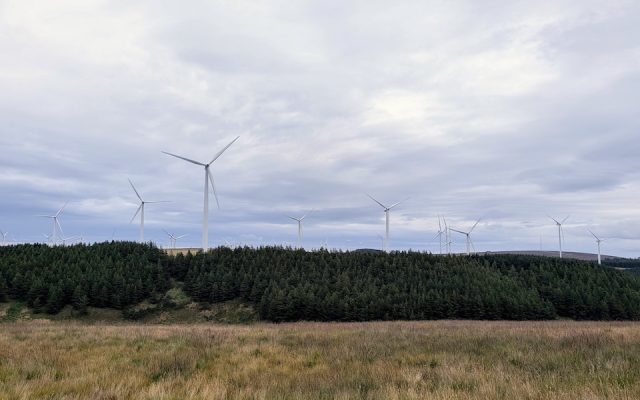
Economic Impact of Crystal Rig 4 Wind Farm
BiGGAR Economics was commissioned by Fred. Olsen Renewables to assess the economic impacts of the construction of the...
1 minute read

Posted 19.06.26
Football in Scottish Society since France ’98
It has been 28 years since Scotland last played in a World Cup. In that time, how has...
1 minute read