

Posted 12.10.26
Securing the Future of Scottish Brewing and Distilling
The alcohol sector makes a major contribution to the Scottish economy, amounting to around £ billion GVA/year and...
1 minute read


Often dismissed as a barrier to economic progress, good planning is more than a regulatory process and can be used as a mechanism to achieve better economic, social, and environmental outcomes. As one of Scotland’s most important economic opportunities, a thriving onshore renewable sector is critical to achieving sustainable growth and meeting Scottish Government ambitions.
Planning is now more important than ever for the energy transition. Currently, National Energy System Operator (NESO) requires onshore developers to secure both planning and a Gate 2 Grid Application before being eligible to apply for the next Contracts for Difference (CfD) Allocation Round. This requirement, and the misalignment between application windows, can create significant programme delays for onshore renewable projects from planning applications.
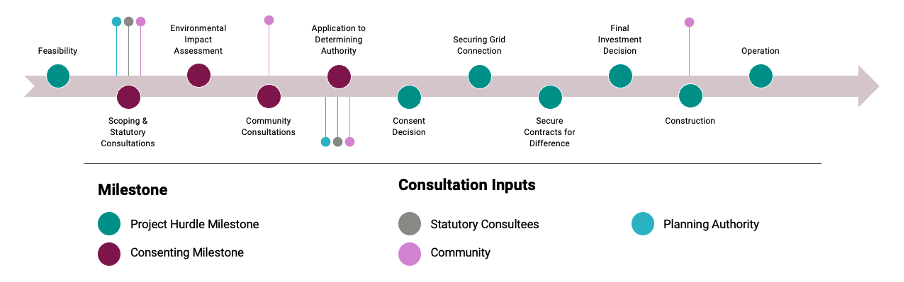
These delays generate costs for both developers and communities and have implications for the Scottish Government’s economic growth ambitions. Namely:
However, reducing planning delays can enable a dramatically more stable, predictable, and investable pipeline, enabling the transition to net-zero and offering significant cost savings to the Government, communities, and developers.
For a 100 MW project currently in the planning system, reducing planning delays by just one year could lead to a cost saving of up to £400,000 in additional interest payments.
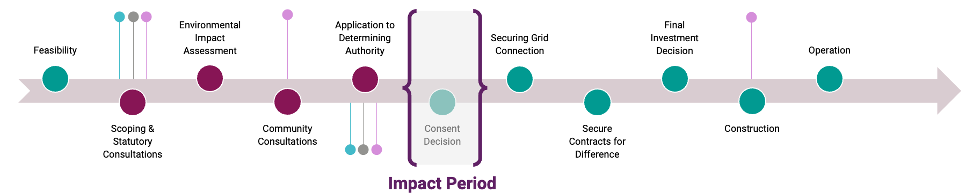
Beyond additional interest payments, the cost of construction for onshore wind projects is continuing to increase at a faster rate than general inflation. For example, consumers paid £1.32 more per MWh for any project that had to wait for AR7a (with the strike price increasing from £70.92/MWh to £72.24/MWh between AR6 and AR7a). In this way, reducing planning delays for a 100 MW project so that they can secure CfD a year earlier, could lead to cost savings of £10 million over the lifetime.
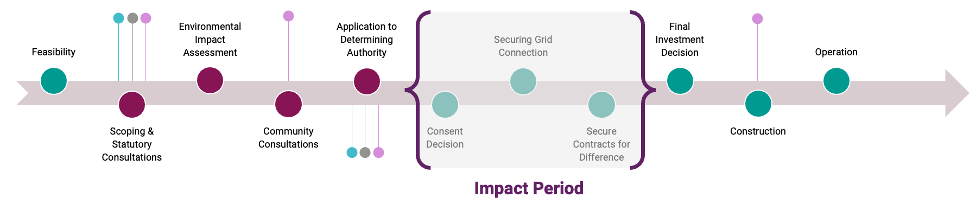
With 9.2 GW of onshore wind capacity currently in the Scottish planning system, significant costs savings are on offer, helping to foster long-term sustainable growth for the Scottish economy, generating benefits for Governments, communities and developers sooner.
For further information on our work on the impact of planning delays, see the full report here.
Posted 08.04.26
Our latest news
Posted 12.10.26
Securing the Future of Scottish Brewing and Distilling
The alcohol sector makes a major contribution to the Scottish economy, amounting to around £ billion GVA/year and...
1 minute read

Posted 08.10.26
Health Holland and the Dutch Life Sciences and Health Ecosystem
Beyond the Subsidy: Why Active Stewardship is the Key to Crowding in R&D Building a successful Life Sciences...
1 minute read
Posted 14.09.26
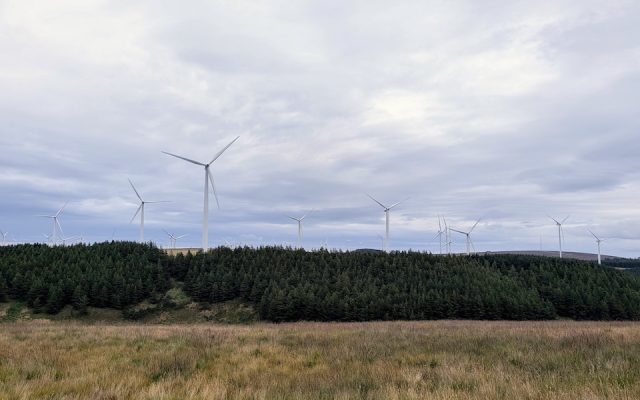
Economic Impact of Crystal Rig 4 Wind Farm
BiGGAR Economics was commissioned by Fred. Olsen Renewables to assess the economic impacts of the construction of the...
1 minute read