
Posted 14.09.26
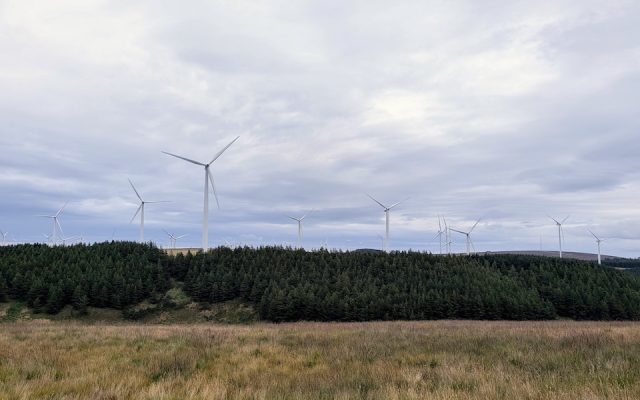
Economic Impact of Crystal Rig 4 Wind Farm
BiGGAR Economics was commissioned by Fred. Olsen Renewables to assess the economic impacts of the construction of the...
1 minute read


Onshore wind farms in Scotland could soon be paying over £200 million each year in Business Rates and around £78 million each year in Wales. This is more than double the amount of money that will be paid locally in Community Benefit Funding. While most people will assume that these taxes are retained by the local authority that collects them, they are actually pooled nationally and then redistributed across the country based on population (Wales) or weighted population (Scotland).
There is a strong argument for retaining the Business Rates of onshore renewables within the host local authority.
The argument for redistributing Business Rates for most industries is based on two points:
These points do not apply to onshore renewables.
The communities hosting these projects have a stake in the natural capital and physical infrastructure that make them possible. Once generating green energy, this flows across the national grid and benefits households and businesses across the country. Given that the benefits of clean energy are widely distributed across the country, there is a strong argument for retaining the revenue from business rates locally to account for the use of local infrastructure and resources.
Retaining Business Rates in the Local Area would have better outcomes for key local authorities that are advocating for change
The development of onshore renewable energy is often focused in areas that have the required Natural Capital. In both Wales and Scotland, councils with a high level of onshore renewable activity have put forward proposals to try and retain a greater share of the value of these projects. Highland Council in Scotland have proposed an additional payment of £7,500 per MW per year as part of its Social Value Charter and Powys Council in Wales has proposed retaining 5% of profits. Both of these proposals have the potential to reduce the financial viability of projects in these areas.
The retention of 100% of Business Rates would result in more money being retained locally than either of those proposals, without any additional risk to project viability. The additional funding from a single typical turbine in Wales, for example, could provide enough money to cover the full cost of a full-time teacher in the host local authority.
This is not a new idea. England introduced the retention of Business Rates locally for onshore renewables in 2012. This was shortly followed by the de facto onshore wind ban in England, and so the local benefits of this change have been muted. However, as onshore wind picks up again in England, this disparity is likely to become more pronounced.
Both the Scottish and Welsh elections are due to be held in the coming months. The administration of Business Rates is an entirely devolved matter, and therefore we would hope to see this topic discussed.

For more information, please see the Briefing Paper below:
Posted 01.04.26
Our latest news
Posted 14.09.26
Economic Impact of Crystal Rig 4 Wind Farm
BiGGAR Economics was commissioned by Fred. Olsen Renewables to assess the economic impacts of the construction of the...
1 minute read

Posted 19.06.26
Football in Scottish Society since France ’98
It has been 28 years since Scotland last played in a World Cup. In that time, how has...
1 minute read

Posted 03.06.26
A Bespoke ESG Framework for the North Coast 500
An Environmental, Social, and Governance (ESG) framework is more than a reporting requirement; it is a roadmap for...
3 minute read